Friend Request Rejected How Long Before You Can Request Again
by Sébastien Portebois
NGINX rate-limiting in a nutshell
NGINX is awesome… simply I found its documentation on rate limiting to exist somewhat… express. And then I've written this guide to rate-liming and traffic shaping with NGINX.
We're going to:
- describe the NGINX directives
- explain NGINX'due south take/reject logic
- aid you visualize how a real burst of traffic is processed using diverse settings: rate-limiting, traffic policy, and assuasive small bursts
Every bit a Bonus, I've included a a GitHub repo and the resulting Docker image and then you can experiment and reproduce the tests. It's ever easier to learn by doing!
NGINX rate-limit directives and their roles

This post focuses on the ngx_http_limit_req_module, which provides y'all with the limit_req_zone and limit_req directives. It as well provides the limit_req_status and limit_req_level. Together these allow yous to control the HTTP response status lawmaking for rejected requests, and how these rejections are logged.
Most confusion stems from the rejection logic.
First, you need to understand the limit_req directive, which needs a zone parameter, and likewise provides optional outburst and nodelay parameters.
There are multiple concepts at play here:
-
zonelets you define a bucket, a shared 'infinite' in which to count the incoming requests. All requests coming into the same bucket volition be counted in the same rate limit. This is what allows you to limit per URL, per IP, or anything fancy. -
burstis optional. If set, information technology defines how many exceeding requests you can take over the base rate. 1 important thing to note here: flare-up is an absolute value, it is non a rate. -
nodelayis also optional and is just useful when you also set aburstvalue, and we'll run across why below.
How does NGINX decide if a request is accepted or rejected?
When you set a zone, you ascertain a rate, similar 300r/k to allow 300 requests per minute, or 5r/s to allow 5 requests each second.
For case:
-
limit_req_zone $request_uri zone=zone1:10m rate=300r/m; -
limit_req_zone $request_uri zone=zone2:10m rate=5r/south;
It's important to understand that these two zones take the same limits. The rate setting is used by NGINX to compute a frequency: what is the time interval before to have a new request? NGINX volition apply the leaky bucket algorithm with this token refresh rate.
For NGINX, 300r/k and 5r/south are treated the same way: let ane request every 0.two seconds for this zone. Every 0.ii second, in this case, NGINX will set a flag to recall information technology can accept a request. When a request comes in that fits in this zone, NGINX sets the flag to false and processes it. If another request comes in before the timer ticks, it volition be rejected immediately with a 503 status code. If the timer ticks and the flag was already set to accept a asking, nothing changes.
Exercise you need charge per unit-limiting or traffic-shaping?
Enter the burst parameter. In guild to understand it, imagine the flag we explained to a higher place is no longer a boolean, but an integer: the max number of requests NGINX can let in a burst.
This is no longer a leaky bucket algorithm, but a token bucket. The rate controls how fast the timer ticks, simply it's no longer a truthful/faux token, but a counter going from 0 to 1+burst value. Every time the timer ticks, the counter is incremented, unless it is already at its maximum value of b+1. Now you should sympathize why the burst setting is a value, and non a rate.
When a new request comes in, NGINX checks if a token is bachelor (i.e. the counter is > 0), if non, the request is rejected. If at that place is a token, so the request is accustomed and will exist treated, and that token will be consumed (the counter is decremented).
Ok, then NGINX will have the request if a burst token is bachelor. Simply when volition NGINX process this request?
You asked NGINX to apply a maximum rate of 5r/s, NGINX accepts the exceeding requests if burst tokens are available, but will await for some room to procedure them within that max rate limit. Hence these burst requests will exist candy with some delay, or they will time out.
In other words, NGINX volition non go over the rate limit ready in the zone declaration, and will therefore queue the extra requests and process them with some filibuster, as the token-timer ticks and fewer requests are received.
To employ a elementary example, allow'southward say you take a rate of 1r/s, and a burst of 3. NGINX receives 5 requests at the same time:
- The first one is accustomed and candy
- Because you allow 1+three, at that place's 1 request which is immediately rejected, with a 503 status code
- The 3 other ones volition exist treated, 1 by one, just not immediately. They will be treated at the charge per unit of
1r/southwardto stay within the limit your set. If no other request comes in, already consuming this quota. Once the queue is empty, the burst counter will start to be incremented over again (the token bucket starts to be filled again)
If you lot use NGINX every bit a proxy, the upstream will get the asking at a maximum charge per unit of 1r/south, and it won't be aware of any flare-up of incoming requests, everything will be capped at that charge per unit.
You only did some traffic shaping, introducing some delay to regulate bursts and produce a more than regular stream outside of NGINX.
Enter nodelay
nodelay tells NGINX that the requests it accepts in the flare-up window should be processed immediately, similar regular requests.
As a consequence, the spikes volition propagate to NGINX upstreams, but with some limit, divers by the burst value.
Visualizing rate limits
Because I believe the best way to remember this is to experience information technology in a hands-on fashion, I set up a small Docker epitome with a NGINX config exposing diverse charge per unit-limit settings to see the responses to a bones rate limited location, to a flare-up-enabled rate-express location, and to flare-up with nodelay charge per unit-limited location, let'south play with that.
These samples use this unproblematic NGINX config (which we'll provide a Docker prototype for at the end of this post then you can more easily examination this):
limit_req_zone $request_uri zone=by_uri:10m rate=30r/thousand; server { mind fourscore; location /past-uri/burst0 { limit_req zone=by_uri; try_files $uri /index.html; } location /past-uri/burst5 { limit_req zone=by_uri flare-up=5; try_files $uri /index.html; } location /by-uri/burst5_nodelay { limit_req zone=by_uri burst=5 nodelay; try_files $uri /alphabetize.html; } } Starting with this config, all the samples below will send 10 concurrent requests at once. Let's run across:
- how many get rejected by the charge per unit-limit?
- what's the processing rate of the accepted ones?
Sending ten parallel requests to a rate-limited endpoint
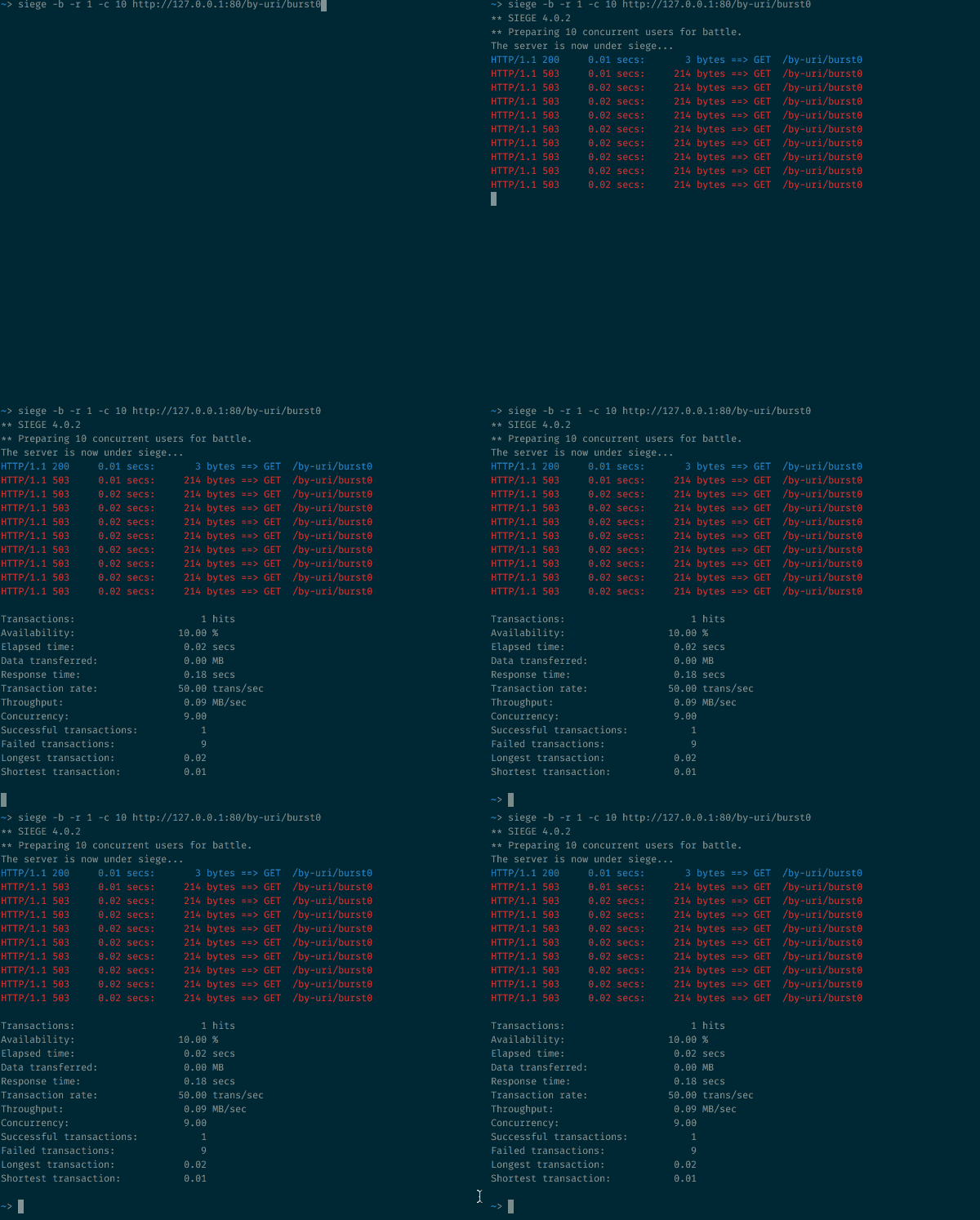
That config allows thirty requests per minute. But 9 out of x requests are rejected in that case. If you followed the previous steps, this should make sense: The 30r/m ways that a new asking is allowed every ii seconds. Here 10 requests arrive at the same time, 1 is immune, the 9 other ones are seen by NGINX before the token-timer ticks, and are therefore all rejected.
But I'm OK to tolerate some flare-up for some customer/endpoints
Ok, and so let'south add together the burst=5 argument to allow NGINX handle small bursts for this endpoint of the rate-limited zone:
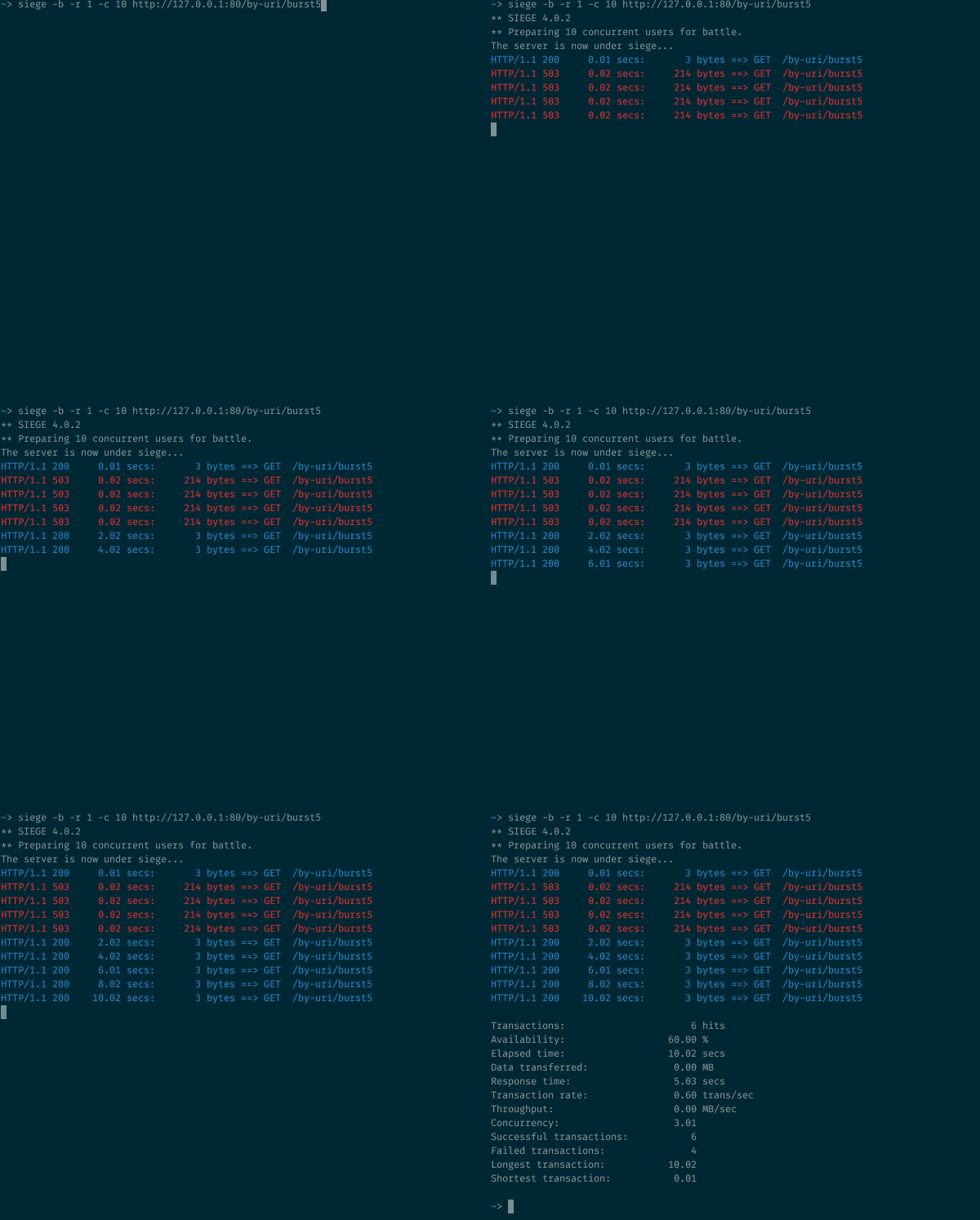
What'south going on hither? As expected with the flare-up argument, 5 more than requests are accepted, then we went from 1 /ten to half-dozen/10 success (and the rest is rejected). Merely the way NGINX refreshed its token and candy the accustomed requests is quite visible here: the outgoing rate is capped at 30r/yard which is equivalent to 1 request every 2 seconds.
The showtime one is returned after 0.ii seconds. The timer ticks after ii seconds, and one of the pending requests is candy and returned, with a total roundtrip fourth dimension of two.02 seconds. two seconds later, the timer ticks again, processing another pending request, which is returned with a full roundtrip time of iv.02 seconds. And so on and and then forth…
The burst statement merely lets you plow NGINX rate-limit from some bones threshold filter to a traffic shaping policy gateway.
In this case, the nodelay argument will be helpful. Let'southward send the aforementioned ten requests to a burst=five nodelay endpoint:
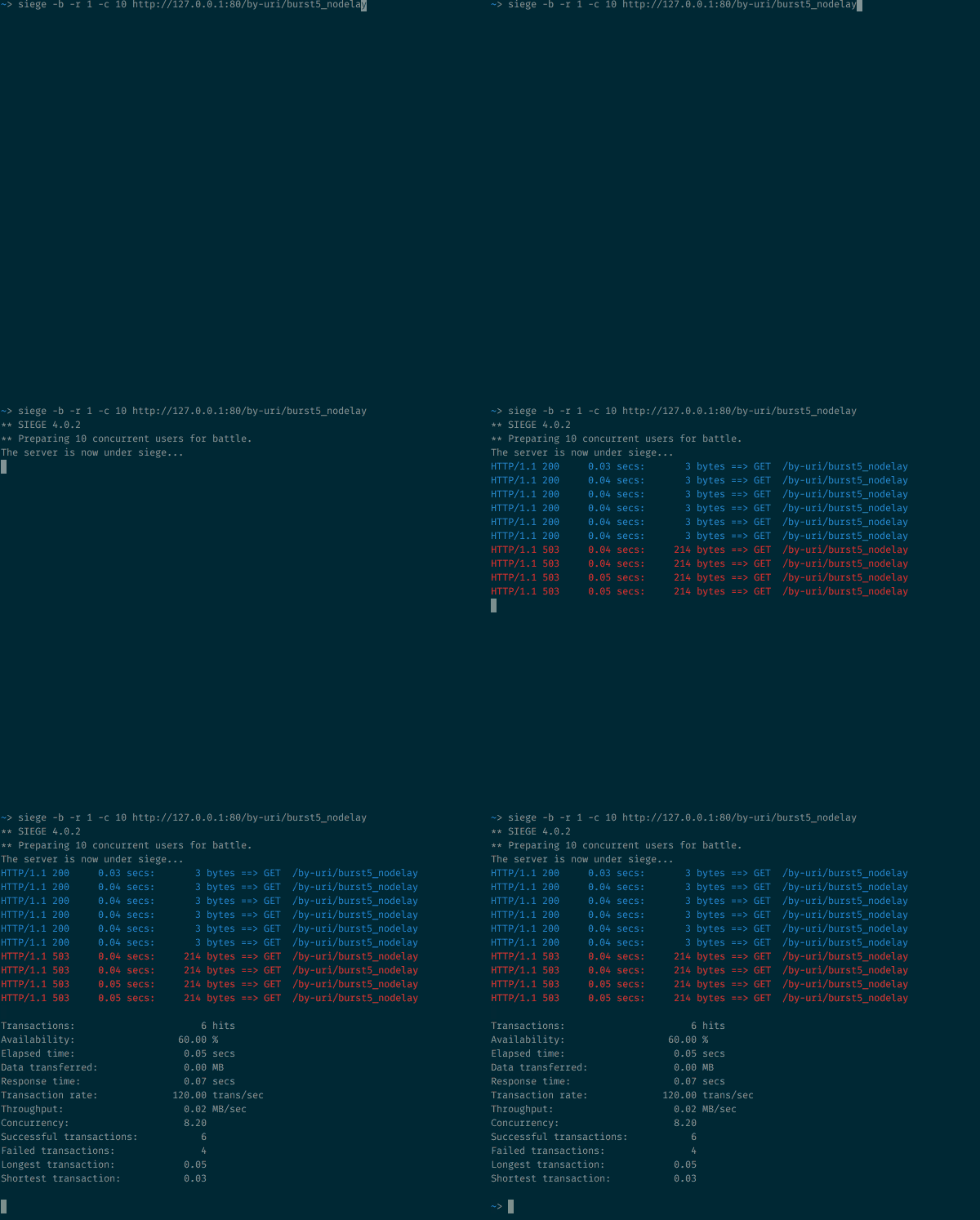
As expected with the outburst=5 we still have the same number of status 200 and 503. Simply now the outgoing rate is no longer strictly constrained to the charge per unit of one requests every 2 seconds. Equally long as some outburst tokens are available, any incoming asking is accepted and candy immediately. The timer tick charge per unit is nevertheless as important as earlier to control the refresh/refill rate of these flare-up tokens, but accepted requests no longer suffer whatever additional delay.
Note: in this case, the zone uses the $request_uri but all the following tests work exactly the same way for a $binary_remote_addr config which would rate-limit past client IP. You'll be able to play with this in the Docker paradigm.
Let'due south epitomize
If we endeavour to visualize how NGINX accepts the incoming requests, then processes them depending on the charge per unit, outburst, and nodelay parameter, here's a synthetic view.
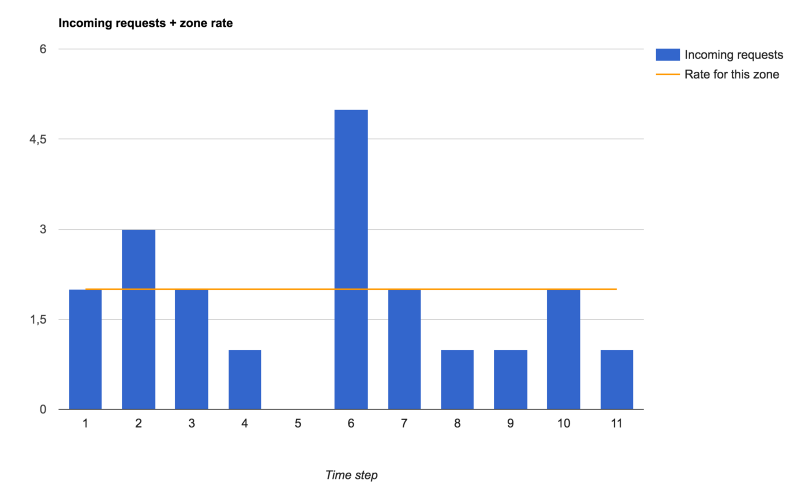
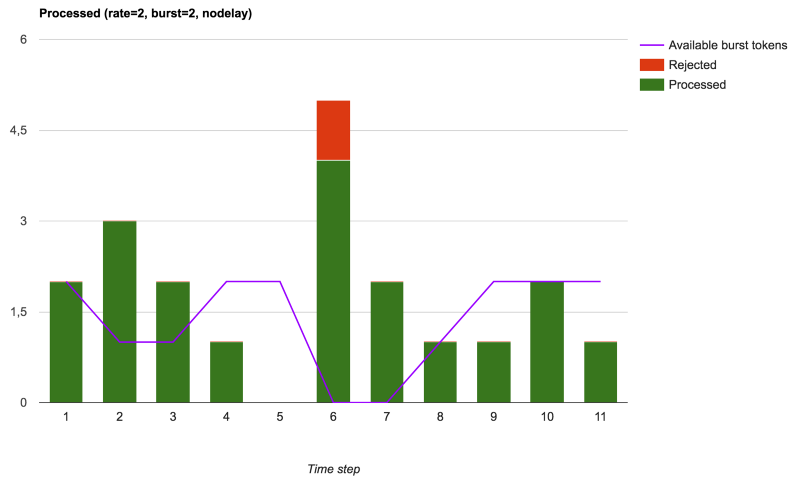
To go on things elementary, we'll show the number of incoming requests (so accepted or rejected, and processed) per time stride, the value of the time footstep depending on the zone-divers rate limit. But the actual duration of that step doesn't matter in the end. What is meaningful is the number of requests NGINX has to procedure within each of these steps.
So here is the traffic we'll send through diverse rate limit settings:
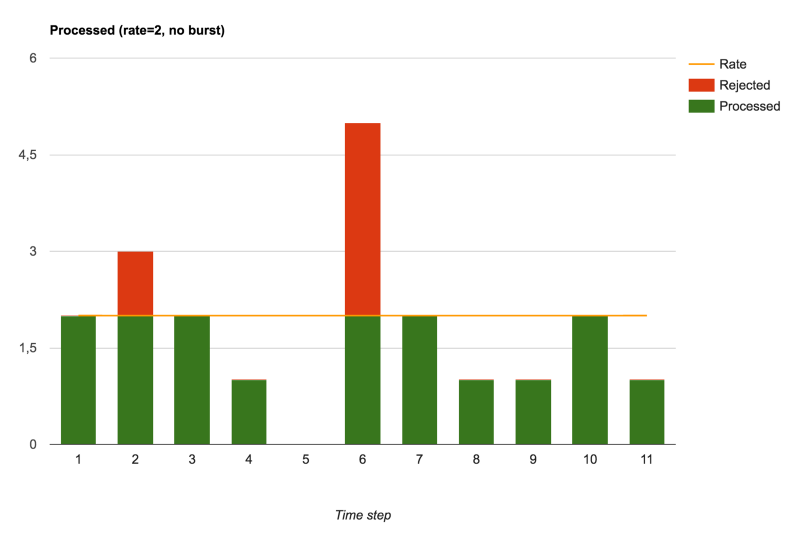
Without using the burst (i.e. flare-up=0), we saw that NGINX acts as a pure rate-limit/traffic-policy player. All requests are either immediately candy, if the rate timer has ticked, or immediately rejected otherwise.
Now if nosotros want to allow the small burst to apply the unused capacity under the rate-limit, we saw that adding a burst argument lets use practice that, which implies some additional delay in processing the requests consuming the burst tokens:
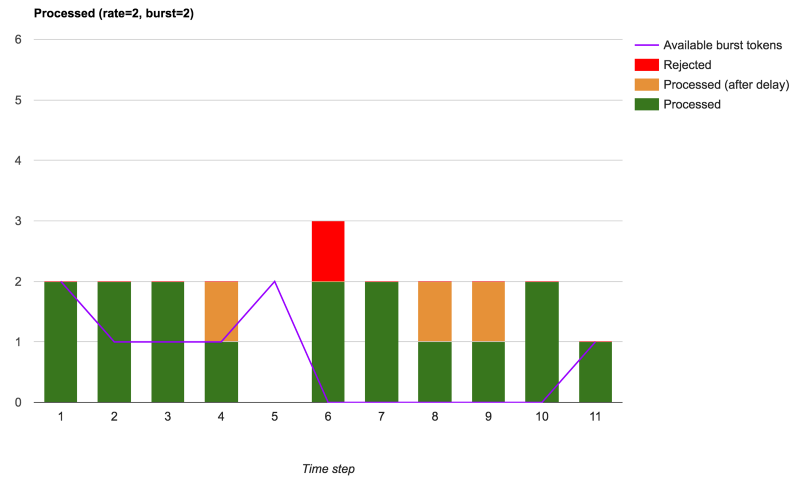
Nosotros can see that the overall number of rejected requests is lower, and NGINX processes more requests. Only the extra requests when no burst tokens are bachelor are rejected. In this setup, NGINX performs some real traffic-shaping.
Finally, we saw that NGINX can exist used to either do some traffic-policy or to limit the size of the burst, just still propagates some of these bursts to the processing workers (upstreams or local), which, in the end, does generate less stable outgoing rate, but with a amend latency, if you can procedure these extra requests:
Playing with the charge per unit limit sandbox yourself
Now you can go explore the lawmaking, clone the repo, play with the Docker image, and become your easily on it existent quick to amend solidify your understanding of these concepts. https://github.com/sportebois/nginx-rate-limit-sandbox
Update (June 14th, 2017)
NGINX published a few days ago their own detailed explanation of their rate-limiting mechanism. You can at present learn more nigh information technology in their Rate Limiting with NGINX and NGINX Plus web log post.
Learn to lawmaking for complimentary. freeCodeCamp'due south open up source curriculum has helped more than than xl,000 people get jobs equally developers. Get started
Source: https://www.freecodecamp.org/news/nginx-rate-limiting-in-a-nutshell-128fe9e0126c/
0 Response to "Friend Request Rejected How Long Before You Can Request Again"
Post a Comment